The following ideas are free to take.
If you are interested, you can hire me to organize one of them for you as a
member/leader/or consultant of your company’s team.
The ideas
1
Reduce Waste in New York City
NYC produces 12.000 tons of waste every day. Only 17-20% gets recycled. 75% of
the waste New Yorkers throw away is made of materials that could be recycled or
composted using existing city programs. My goal is to reduce the waste sent to
landfills to close to zero.
Identify packaging materials
Find recyclers for these materials
Eliminate from the waste stream non-recyclable materials through policy
and action
Further eliminate waste from trash by
Composting all organics
Collect e-waste regularly for recycling
Establish repair/reuse centers for furniture and other repairable
items - this creates workplaces for locals and provides cheap
furniture/household items for those in need.
2
Protect the Rainforest from further
deforestation
Earth’s rainforests are in danger. The Amazon is on the brink of becoming a CO2
emitter instead of drawing down CO2 from the atmosphere. Deforestation also
causes the climate in the Amazon area to change from tropical to savannah, which
will further reduce its water retention capability.
75% of all rainforests experience degradation daily. Only 25% remains intact.
It is time we step up and treat rainforests like world heritage and protect them
from further degradation. Reforestation is of utmost importance where
possible.
Establishing Rainforest Guardianships along the geographical borders of
the remaining rainforest, including governments, indigenous communities,
NGOs, the UN, and private companies, with the goal of:
Maintaining the rainforest intact needs to yield more for owners than
clearing it.
Good examples exist. We must learn from them and disseminate working
practices: Indigenous Guardianships, Agroforestry, and Sustainable
Forestry, for example. We need practices that are truly sustainable and
are not greenwashing, like RSPO, for example.
3
Eliminate Plastic in the Ocean
Plastics leaking into the ocean have to come to an end. We also need to deal
with the tremendous amount of plastic in the ocean, like the island in the
middle of the Pacific.
With the help of Google Earth, main leakage points can be identified. By
involving local authorities, action can be taken to stop plastic from leaking
into the ocean through legislation, incentives, and control.
Collaborate with and enhance the work of ocean-cleaning organizations,
establishing a partnership to eliminate the plastic island in the middle of
the Pacific Ocean and slowly but surely clean up our oceans.
4
Reforming Current Unsustainable
Agriculture into Regenerative Food Production
Current agricultural practices and intensive farming deplete the soil and put
toxins into the environment and our food. At the same time, agriculture is a
huge contributor to greenhouse gas emissions. This doesn’t have to be.
Agriculture, which feeds us all, can and should be sustainable and follow best
practices for people and the planet.
The methods exist for sustainable agriculture that provide better food and
protect the soil. Even cows can be part of the solution to climate change by
putting CO2 into the soil if kept free-range on grass. Agriculture needs to be
reformed, and factory farming has to come to an end. This requires lobbying,
negotiations, and a strong consumer movement.
5
Put Climate at the Forefront of
Policy
The economy is at the forefront of policy. The economy drives our policies,
not sustainability. Sustainability needs to be the driving force behind the
economy because, in the current state of the planet, we don’t have any other
choice. Building green infrastructure fuels the economy and creates jobs and
opportunities for sustainability to grow.
Policy changes and incentives are necessary; so is a paradigm change in
public opinion, which is already on the horizon. With more people gaining
consciousness about the state of the planet, their consumer choices will
change. Our job is to make their choices obvious and abundant for them, so
they can opt for the more sustainable alternatives and change their
consumption habits. However, sustainability isn’t only about consumers’
choices.
Sustainability for companies needs to be incentivized, third-party reports
mandated and vigilantly monitored with benchmarks and KPIs that are set by an
agreement of government agencies, consumer protection NGOs, sustainability
consultants, and best practices from around the world.
6
Homelessness
Homeless people are on the streets of every city. While economists want us to
believe it’s their fault, if you listen to their stories, it becomes clear that
most of them fell out of the system through no fault of their own. Low-income
housing, preventative care, job opportunities, and social networks are all
necessary to prevent this phenomenon. Healthcare, dignity, and options to get
off the streets are essential services every city and state should provide to
help people reintegrate into society. For those who can’t or unwilling to do
so, alternatives must exist.
Using worldwide best practices, establish shelters with the goal of
resocialization into society. Job opportunities through sustainability
initiatives, such as city farming, repair centers, and recycling, can provide
incentives for people to participate in society. Low-income housing and
resocialization by social workers are necessary to support people on this
journey.
7
Social Justice
Climate change and social justice are deeply connected because an
environmental crisis worsens existing inequalities based on income, geography,
race, or gender. While climate should be considered behind everything we do, we
cannot start acting without thinking of social justice. The most important
ongoing conflict of our time regarding social justice is in the Middle East. I’m
not talking about Iran; I’m talking about Israel and Palestine/Gaza.
Reconciliation of that conflict will have a domino effect on war conflicts all
over the world.
I wrote my second thesis in 1999 on the peace process in the Middle East. I
was able to encounter students and other people on both sides of the conflict
as part of a German social pedagogy student group visiting Israel and the West
Bank in 1998. Neither side was able to do that, so they relied on the picture
that was portrayed about “them” instead of having met each other face to face.
In my thesis, I describe a program that would help strengthen the peace
process. Recruiting students from 6 universities (3 Israeli and 3 Palestinian)
to spend 2 weeks together and work together over the following 6-9
months.
In the first week, the students will get to know each other and their
history, narrative, and personal stories. They become one group through
experiential pedagogical methods over the weekend, and next week the
students form workshops around their personal interests. In those workshops,
they work out a plan for the next 6-9 months and start working with an
NGO/organization which will mentor them and help them to execute their plan.
The goal is outreach to society with projects that enable peer encounters,
exchange views, and change mindsets towards a peaceful coexistence. The thesis
was written in 1999, and a lot has changed for the worse since. I still do
believe that peace is possible and the 76-year-old conflict can be solved. My
plan is not enough, though; we need a wide range of representatives of both
societies who also believe that peaceful coexistence is possible and are
willing to work on it.
“A little girl with big dreams.”
About me
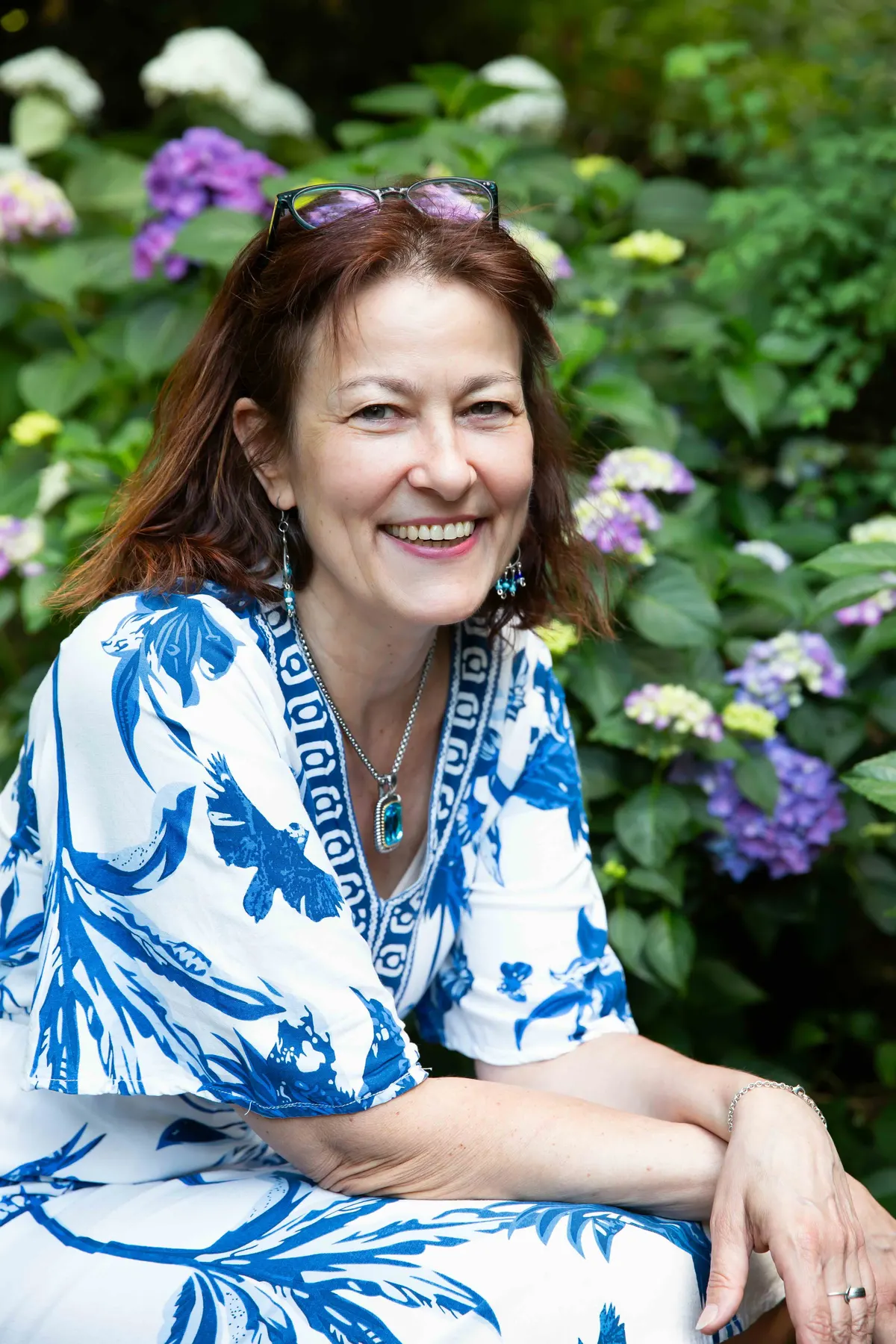
I still feel like I’m a little girl with big dreams. Even
though I know that I’m no longer a little girl, but a powerful, very capable
woman.
My can-do personality and limitless dreams have helped me to achieve great things
in life.
For example, I organized one-time events like festivals, moving ten thousand
visitors, student exchange programs between countries, and bicycle marches, just to
name a few.
I’ve created two organizations. The Buds Foundation for Human and Nature
Protection, which was one of the most renowned green organizations in Hungary in its
5th year of existence. In essence, we mobilized locals for tree planting, forest
cleaning, festivals, marches, and demonstrations. We hosted international volunteers
to run an ecofarm and waste recycling program in a housing complex that I started.
Environmental education in the local schools, summer camps, and outreach to the
community were our most important projects. We also ran a local office and radio
station to strengthen civil society in town. Established an experience path in the
local forest with the help of Ökowerk, from Berlin, and ran experimental pedagogy
classes for kids in the forest.
For the last two years I was there, the Foundation was a recipient of a European
Union Grant (Approx. 330,000 USD) to create an employment program for the
underserved; trained in recycling plastics/textiles for fifty individuals in two
years, leading to certification and lasting employment. Led grant writing, planning,
and oversight.
The second was a project I started for my kids to keep their Hungarian alive while
living in New York with an American husband. Over time, it has grown into a
publishing house, at first building off of a methodology I created for speech onset
and literacy. I authored 12 books, created 2 games, 7 kits including word cards,
storybooks with patented editing, interactive films, and a parental guide. Other
books feature some of the most renowned authors of Hungary. We have a total of 36
products and a 2-year-long subscription service that transforms non-speaking
toddlers into self-expressive kids with parent-led learning - developing not only
their brains but relationships as well.
Click here to learn more.
(opens in a new tab)
I’m also an artist and a postpartum doula. Serving women in their most vulnerable
time in their lives became my passion. Creating art is my hobby and therapy.
I strive to make the world a better place by creating connections between humans.
My ultimate goal is to co-create a world where we live in harmony with nature and in
peace with each other.